Transition from Trustee Colony to Royal Colony
...
Subject Area: Social Studies | Grade Level: 8
Lesson Length: 30 minutes
Keywords/Tags: Georgia History: Transition from Trustee Colony into Royal Colony
Lesson Description: During this project, students will explore living conditions during the Trustee period of Georgia from 1732-1752 and compare/contrast that era with the Royal Colony period from 1752-1776. Students will analyze the main differences between the colonies by assessing land ownership, slavery, alcohol, and the government structure.

  • Other SS8H2 Analyze the colonial period of Georgia’s history.rnd. Explain the transition of Georgia into a royal colony with regard to land ownership, slavery, alcohol,rnand government.
Video : Georgia The Trustee Colony
Instructions: Please watch the following video as many times as needed before starting to go through other lesson pages. Understanding the content of the video is very important since the lesson activities will be all about this video content.Please watch the following video as many times as needed before starting to go through other lesson pages. Understanding the content of the video is very important since the lesson activities will be all about this video content.Please watch the following video as many times as needed before starting to go through other lesson pages. Understanding the content of the video is very important since the lesson activities will be all about this video content.")
Video : Georgia: The Royal Colony
Instructions: Please watch the following video as many times as needed before starting to go through other lesson pages. Understanding the content of the video is very important since the lesson activities will be all about this video content.
Reading : Trustee Georgia (1732-1752)
Instructions: Please read the following article as many times as needed (aloud and silent) before starting to go through the rest of the lesson pages. Understanding the content of this passage is very important since the following lesson activities will be all about this content. Feel free to print the article if needed.

The first twenty years of Georgia history are referred to as Trustee Georgia because during that time a Board of Trustees goveed the colony. England’s King George signed a charter establishing the colony and creating its goveing board on April 21, 1732.

Origins
James Edward Oglethorpe, famous for conducting a parliamentary investigation into the conditions of London prisons, exercised a leading role in the movement to found the new colony. He confided to his friend John Lord Viscount Percival (known as the first earl of Egmont after that title was conferred on him in 1733) that he intended to help released debtors begin a new life in America. In fact, Oglethorpe had received a grant of £5,000 to carry out his plan. In 1729 Dr. Thomas Bray chose trustees to administer his estate. In addition to Oglethorpe, the trustees, called the Associates of Dr. Bray, included several future members of the Georgia Trust, notably Percival, James Veon, and Thomas Coram. Coram is better known as the founder of the Foundling Hospital in London. Oglethorpe and his friends decided to add the Bray legacy to the funds in hand for the purpose of establishing a new colony between the Savannah and Altamaha rivers, in territory claimed by both the province of South Carolina and the Spanish colony of Florida.

 
James Oglethorpe

Courtesy of Hargrett Rare Book and Manuscript Library, University of Georgia Libraries.
On September 17, 1730, the associates presented a petition for a charter to the Privy Council, Parliament’s executive body, headed by the chancellor of the exchequer, Robert Walpole. The petition was routinely passed on to the notoriously inefficient Board of Trade, which dawdled for a year without acting. Walpole, the prime minister, was less than eager to challenge the Spanish, who had a prior claim to the region requested by the petitioners. Walpole needed the support of the influential members of Parliament who supported the charter, however, and he managed to bring the charter before the Privy Council. After going through several revisions, the notion of helping debtors gave way to a more pragmatic plan to send over “the deserving poor” who would protect South Carolina while producing such goods as wine and silk for England.

The Georgia Charter
The charter contained contradictions. The colonists were entitled to all the rights of Englishmen, yet there was no provision for the essential right of local govement. Religious liberty was guaranteed, except for Roman Catholicism and Judaism. A group of Jews landed in Georgia without explicit permission in 1733 but were allowed to remain. The charter created a corporate body called a Trust and provided for an unspecified number of Trustees who would gove the colony from England. Seventy-one men served as Trustees during the life of the Trust. Trustees were forbidden by the charter from holding office or land in Georgia, nor were they paid. Presumably, their motives for serving were humanitarian, and their motto was Non sibi sed aliis (“Not for self, but for others”). The charter provided that the body of Trustees elect fifteen members to serve as an executive committee called the Common Council, and specified a quorum of eight to transact business. As time went on, the council frequently lacked a quorum; those present would then assume the status of the whole body of Trustees, a pragmatic solution not envisioned by the framers of the charter. Historian John McCain counted 215 meetings of the Common Council and 512 meetings of the corporation.


Seal of the Trustees
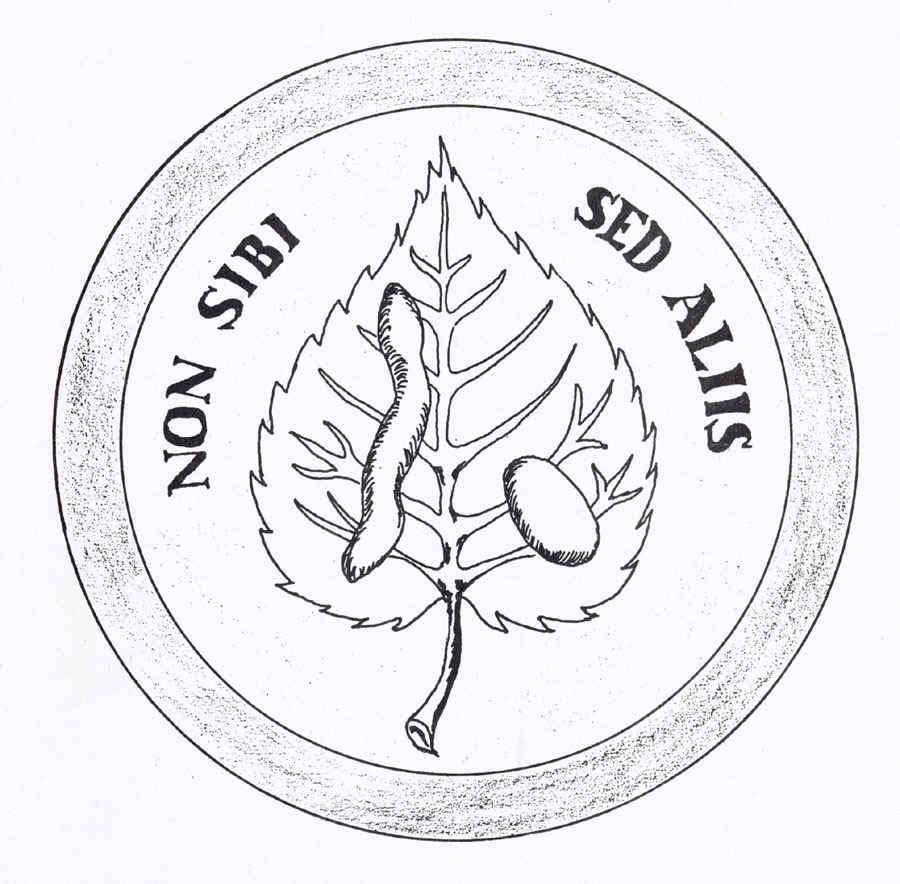
Courtesy of Georgia Historical Society.
 
Seal of the Trustees

Courtesy of Georgia Historical Society.
Twelve Trustees attended the first meeting on July 20, 1732, at the Georgia office in the Old Palace Yard, conveniently close to Westminster. Committees were named to solicit contributions and interview applicants to the new colony. On November 17, 1732, seven Trustees bade farewell to Oglethorpe and the first settlers as they left from Gravesend aboard the Anne. The Trustees succeeded in obtaining £10,000 from the govement in 1733 and lesser amounts in subsequent years. Georgia was the only American colony that depended on Parliament’s annual subsidies.

Active Trustees
The most active members of the Trust, in terms of their attendance at council, corporation, or committee meetings, were, in order of frequency, James Veon, the earl of Egmont, Henry L’Apostre, Samuel Smith, Thomas Tower, John Laroche, Robert Hucks, Stephen Hales, James Oglethorpe, and Anthony Ashley Cooper, fourth earl of Shaftesbury. The number of meetings attended ranged from Veon’s 712 to Shaftesbury’s 266. Sixty-one Trustees attended fewer meetings.

James Veon, one of the original Associates of Dr. Bray and an architect of the charter, maintained an interest in Georgia throughout the life of the Trust. He arranged the Salzburger settlement and negotiated with the Society for the Propagation of the Gospel in Foreign Parts for missionaries. He differed from Egmont and Oglethorpe in his willingness to respond to the colonists’ complaints. When Oglethorpe became preoccupied with the Spanish war, Veon proposed the plan of dividing the colony into two provinces, Savannah and Frederica, each with a president and magistrates. The Trustees named William Stephens president in Savannah, and he served until 1751, when he was replaced by Henry Parker in the final year of the Trust’s tenure. Oglethorpe neglected to name a president for Frederica, and the magistrates there were instructed to report to Stephens. The Trustees did not want to appoint a single goveor because the king in council had to approve the appointment of goveors, and the Trustees preferred to keep control in their hands. After Egmont’s retirement in 1742, Veon became the indispensable man. He missed only 4 of 114 meetings during the last nine years of the Trust and supervised the removal of restrictions on land tenure, rum, and slavery.

Egmont, the first president of the Common Council and the dominant figure among the Trustees until his retirement, acted as Georgia’s champion in Parliament. He strongly opposed Walpole’s attempts to conciliate Spain at the expense of Georgia. He had to walk a careful line, however, because the Trustees depended upon Walpole for their annual subsidies.

Other Trustees contributed according to their abilities. Henry L’Apostre advised on finances, Samuel Smith on religion, and Thomas Tower on legal matters, particularly on instructions to Georgia officials. Stephen Hales’s closeness to the royal family and his standing as a scientist lent prestige to the body of Trustees. Shaftesbury, a political opponent of Walpole, joined the Common Council in 1733 and, except for a brief resignation, remained faithful to the end. He led the negotiations to convert Georgia to a royal colony. For the entire twenty years the Trustees employed only two staff members, Benjamin Martyn as secretary and Harman Verelst as accountant.

Georgia Indians in London
Oglethorpe retued to England in June 1734 with goodwill ambassadors in the persons of Yamacraw chief Tomochichi, Senauki, his wife, their nephew Toonahowi, and six other Lower Creek tribesmen. The Indians were regarded as celebrities, feted by the Trustees, interviewed by the king and queen, entertained by the archbishop of Canterbury at Lambeth Palace, and made available to meet the public. All but two of them posed with a large number of Trustees at the Georgia office for the painter William Verelst. One of the absent Indians died of smallpox, despite the ministrations of the eminent physician Sir Hans Sloane, and was buried by his grieving comrades in the burial plot of St. John’s in Westminster. After performing their social obligations, the Indians became tourists, visiting the Tower of London, St. Paul’s Cathedral, Oglethorpe’s Westbrook Manor, and Egmont’s Charlton House, and enjoying a variety of plays, from Shakespearean dramas to comic farces.

 
Tomochichi

Courtesy of Hargrett Rare Book and Manuscript Library, University of Georgia Libraries.
Salzburgers, Moravians, and Highlanders
The Indians departed on October 31, 1734. With them went fifty-seven Salzburgers to join the forty-two families already in Georgia at Ebenezer. In 1734 and 1735 two groups of Moravians went to Georgia. As pacifists they opposed doing military duty and left Georgia by 1740. After delivering the Indians and Salzburgers to Georgia, Captain George Dunbar took his ship, the Prince of Wales, to Scotland. Dunbar and Hugh Mackay recruited 177 Highlanders, most of them members of Clan Chattan in Inveess-shire. In 1736 the Highlanders founded Darien on Georgia’s southe boundary, the Altamaha River. The Scots of Darien, who were extremely capable fighters, assisted Oglethorpe during the siege of St Augustine in 1740. They were also responsible for introducing another denomination of Christianity to the colony, Presbyterianism. Dunbar subsequently served as Oglethorpe’s aide in Georgia and in Oglethorpe’s campaign against the Scots in 1745.

Oglethorpe went to Georgia in 1736, with the approval of his fellow Trustees, to found two new settlements on the frontiers, Frederica on St. Simons Island and Augusta at the headwaters of the Savannah River in Indian country. Both places were garrisoned by troops. In 1737 Oglethorpe retued to England to demand a regiment of regulars from a reluctant Walpole. Not only did he get his regiment and a commission as colonel, but Egmont persuaded Walpole to pay for all military expenses.

Trustee Legislation and Reactions
In 1735 the Trustees proposed three pieces of legislation to the Privy Council and had the satisfaction of securing the concurrence of king and council. An Indian act required Georgia licenses for trading west of the Savannah River. Another act banned the use of rum in Georgia. A third act outlawed slavery in Georgia. South Carolina protested the Indian act vehemently and objected to the Trustees’ order to restrict the passage of rum on the Savannah River. The Board of Trade sided with South Carolina, and a compromise was reached, allowing traders with Carolina licenses to continue their traditional trade west of the Savannah River. The Trustees objected to the Board of Trade’s tampering and refrained from proposing any additional legislation requiring approval of the Privy Council.

Continual complaints by the colonists and the near abandonment of Georgia during the war with Spain discouraged all but the most dedicated of the Trustees. Especially embarrassing was the list of grievances presented on the floor of Parliament by Thomas Stephens, son of the Trustees’ agent in Georgia, William Stephens. A committee went through the motions of looking into the complaints and then exonerated the Trustees. Stephens was made to kneel in apology on the floor of Parliament. However, the prestige of the Trustees had been wounded, and their influence in Parliament weakened. Walpole lost office in 1742, and the new administration declined the Trustees’ request for funding. Egmont resigned in protest, but not all the Trustees gave up. Under the leadership of Veon and Shaftesbury, the Trustees conciliated the administration, and the govement renewed the annual subsidies until 1751, when the Trustees’ request was again denied.

Oglethorpe retued from Georgia in 1743 and never again showed the same enthusiasm for the work of the Trust. He disagreed with the relaxation of the ban on rum in 1742 and with the admission of slavery in 1751. He engaged in an unfortunate argument with the Trustees over expenses. The accountant claimed that he owed the Trust £1,412 of funds used for military purposes for which he had been compensated. Oglethorpe countered that the Trustees owed him far more than that amount. No agreement was reached. Oglethorpe attended his last meeting on March 16, 1749.

End of Trustee Rule
In March 1750 the Trustees called upon Georgians to elect delegates to the first representative assembly but cautioned them only to advise the Trustees, not to legislate. Augusta and Ebenezer each had two delegates, Savannah had four, and every other town and village had one. Frederica, now practically abandoned, sent no delegate. Sixteen representatives met in Savannah on January 14, 1751, and elected Francis Harris speaker. Most of the resolutions conceed improving trade. The delegates showed maturity in requesting the right to enact local legislation, and they opposed any annexation effort on the part of South Carolina. The Trustees intended to permit further assemblies, but the failure of Parliament to vote a subsidy in 1751 caused the Trustees to enter into negotiations to tu the colony over to the govement a year before the charter expired. Only four members of the Trust attended the last meeting on June 23, 1752, and of the original Trustees only James Veon persevered to the end.

The earl of Halifax, the new president of the Board of Trade, secured broader powers and infused new life int the administration of the board. He regretted that the colonies had been neglected for so long, and he intended to make Georgia a model colony and an example to others. Thus Georgia passed from the control of one set of gentlemen of Parliament to another.

 
Georgia Trustees Medallion

Courtesy of Georgia Historical Society.
In conjunction with the goveor’s office, in 2008 the Georgia Historical Society created an awards program called the Georgia Trustees as a way of recognizing Georgians whose accomplishments and community service reflect the highest ideals of the founding body of Trustees.

Reading : Royal Georgia (1752-1776)
Instructions: Please read the following article as many times as needed (aloud and silent) before starting to go through the rest of the lesson pages. Understanding the content of this passage is very important since the following lesson activities will be all about this content. Feel free to print the article if needed.

Royal Georgia refers to the period between the termination of Trustee goveance of Georgia and the colony’s declaration of independence at the beginning of the American Revolution (1775-83). During that period the province was administered in theory by the king of England but in practice by a member of his cabinet known at various times as secretary of state for the Southe Department and secretary for America. A provincial council provided a semblance of govement during the years 1752-54 while the Georgia charter passed through parliamentary committees and received the royal signature. John Reynolds, the first royal goveor of Georgia, proved ineffective and was recalled at the end of 1756. The second royal goveor, Henry Ellis, established a sound foundation for govement during his four-year administration. James Wright, who replaced Ellis in 1760, proved to be an efficient administrator and a popular goveor. During his tenure in office Georgia enjoyed a period of remarkable growth.

The Reynolds Administration, 1754-1757

In 1752 a committee of Parliament called the Board of Trade acquired the authority to nominate colonial officials. George Montagu-Dunk, Lord Halifax, the board’s president, intended Georgia’s charter to be a model for other American colonies. The charter provided for a strong goveor empowered to convoke an assembly, pass on legislation, propose the erection of courts, approve land grants, enforce the laws, and otherwise administer the province. Other officials included an attoey general, a provost marshal, a clerk of council, a receiver of quitrents, a surveyor, and various customs officials. The legislature consisted of an assembly of two representatives from each county of the colony, which were created as soon as possible. In addition, there would be a council that would act as an upper house, as well as a court of appeals. The Board of Trade nominated the goveor and members of the council, subject to the approval of the king.

Most Georgians welcomed Goveor John Reynolds when he arrived from England on October 29, 1754. However, Reynolds, a career naval officer, lacked the political experience and skills necessary to the establishment of a model govement. At the outset he alienated a backcountry faction headed by Edmund Gray, a Quaker planter and an influential Georgia politician, by refusing to inquire into claims of fraud in Georgia’s first election in 1754 and by branding the protestors as rebels. Then the goveor frustrated the members of his council by awarding the most lucrative colonial offices to William Little, a naval surgeon who accompanied him to Georgia. When the council tued against him, the goveor allied himself with his former enemies, the Gray faction, who shared his dislike of the Savannah-dominated council. Reynolds showed an equal lack of skill in Indian diplomacy, a crucial matter because his first year of office coincided with the beginning of the French and Indian War (1754-63). Georgia was dangerously exposed to raids by the Creek and Cherokee nations, and the Louisiana French hoped to instigate such attacks.

Lord Halifax reacted to the chorus of complaints from Georgia by recalling Reynolds at the end of 1756 and naming Henry Ellis as his successor.

The Ellis Administration, 1757-1760


Henry Ellis was a member of the Irish Protestant landed gentry. He might have been named the first royal goveor of Georgia except that in 1754 he was out to sea as captain of his vessel, Earl of Halifax. Ellis possessed important qualities Reynolds lacked: intelligence, tact, sensitivity, wit, and political ability.

Ellis disembarked in Charleston, South Carolina, on January 26, 1757, and proceeded to Savannah, where crowds welcomed him as a deliverer from the unpopular Reynolds regime. Reynolds’s supporter William Little had been elected Speaker of the assembly and prepared a speech opposing Ellis. Anticipating opposition, Ellis simply adjoued the assembly until Reynolds and Little left Georgia under orders to report to Lord Halifax.

Ellis deserves to be remembered as the second founder of Georgia, after General James Oglethorpe. After no representative govement under the Trustees and a bungled administration under Reynolds, Ellis taught Georgians the art of self-govement. He explained the need for a budget and for raising taxes to support expenditures; he quieted factionalism; and he proposed necessary legislation establishing public credit, regulating Indian trade, clarifying land titles, and defending the province by forts, including one around Savannah. Mindful of his orders to establish counties, Ellis proposed the establishment in 1758 of eight electoral districts called parishes. The legislation wisely refrained from imposing the established church upon such dissenters as the Lutheran Salzburgers at Ebenezer.

Ellis tried to abolish slavery by proposing legislation to free mulattoes, thereby creating a class between white and Black members of society, and freeing all enslaved people when they reached the age of thirty. In that effort he failed. Instead, slavery, which had been legalized by the Trustees in 1751 after growing opposition to the colony’s ban, continued to have great effect on Georgia’s political and agricultural structure. Rich planters from the Carolinas flooded into Georgia’s lowland in the early 1750s, and within twenty years about sixty of these planters owned half of Georgia’s enslaved population and dominated Georgia’s rice economy. Between 1750 and 1755 the number of enslaved people in the colony grew from about 500 to 18,000, and in the mid-1760s Georgia began importing captive workers directly from Africa. 

Ellis is best remembered for his skill in dealing with Indians on a personal basis. He arranged a settlement of the troublesome Bosomworth claims, winning the gratitude of the influential Mary Musgrove Bosomworth. He managed to retain the friendship of the Creek Nation even while the Cherokees conducted raids throughout backcountry South Carolina and Georgia in 1760. He asserted Georgia’s right to control the Indian trade west of the Savannah River and refused to recognize South Carolina’s claim to military jurisdiction over Georgia. In short, he found Georgia in an unformed—almost chaotic—condition and left it as a functioning enterprise with the tools necessary for survival.
Poor health forced Ellis to leave Georgia in 1760. A grateful Halifax appointed him goveor of Nova Scotia. Ellis never went to his new post, however, because, as an expert in American affairs, his advice was useful to the new secretary of state, Charles Wyndham, Lord Egremont. Ellis thus retued to England.

The Wright Administration, 1760-1776


James Wright understood colonial govement, having served as South Carolina’s attoey general from 1742 to 1757. He benefited from several weeks of coaching by Henry Ellis before Ellis left Georgia in 1760, and he continued Ellis’s policies. He also had the advantage of more politically educated Georgians serving in the assembly. Goveor and assembly agreed that Georgia needed more people and more land for settlement. During the French and Indian War (1754-63) available land for settlement was restricted to the tidewater region. The peace settlement of 1763 made Georgia a virtual empire, stretching to the St. Marys River in the South and the Mississippi River in the West; however, the Indian nations of the interior actually possessed the land, and the Creeks claimed all the territory west of the Savannah River above the tidal flow.


James Wright
Courtesy of Hargrett Rare Book and Manuscript Library, University of Georgia Libraries.

In 1763 Goveor Wright and British Superintendent for Indian Affairs John Stuart, abetted by influential traders Lachlan McGillivray and George Galphin, arranged a cession of the territory between the Savannah and the Ogeechee rivers as far north as the Little River. The Proclamation of 1763 forbade settlement west of the Appalachian Mountains and had the effect of funneling westward migration into the Georgia backcountry around Augusta. Those who had the land legally surveyed and recorded Wright called the “better sort,” but he admitted that most were squatters who disregarded all laws. Wright and his friends called those newcomers “crackers.” Inevitably, friction began between the settlers who coveted Indian land and the Indians who continued to travel the old trails to Augusta.

In order to grow the population of the 1763 cession, the assembly created two townships: Wrightsborough on the Little River and Queensborough on the Ogeechee River. A number of law-abiding Quakers from North Carolina lived together in Wrightsborough, but the Queensborough settlers scattered into individual farms. An opportunity for further expansion appealed to Goveor Wright when, in 1771, Cherokee traders informed him that those Indians were willing to exchange land above the Little River if the govement would assume the debts they owed to their traders. Wright thought so well of the idea that he went to London in 1772 to persuade the ministry that the increase in settlement would provide greater security against future Indian attacks. He retued in 1773 as Sir James Wright with royal approval of the proposed second cession. In May 1773 the reluctant Creeks (who were now also in debt) joined the Cherokees at Augusta and signed away land above the Little River. The Creeks refused to yield the territory west of the Ogeechee River that Wright had hoped to obtain. Wright toured the “Ceded Lands” and widely advertised their advantages, stressing the distance from New England and the tumult caused by the British tax on tea.

Georgia experienced its own kind of tumult when dissident Creek and Cherokee Indians raided the frontier settlements near Wrightsborough in the winter of 1773 and 1774. The outbreak prevented the hoped-for influx of settlers. Wright secured the cooperation of the other southe colonial goveors in prohibiting trade with the Indians while the violence lasted. The boycott worked: in April Creek leaders asked for peace, and in October a treaty was drawn up in Savannah. Wright disappointed backcountry expansionists by neglecting to obtain a further cession of land as a condition of peace, and they accused the goveor of favoring the Indian traders and merchants. The outlying parishes that had supported Wright now joined the Lowcountry radicals in opposing the British “Intolerable Acts.”

Opposition to parliamentary efforts to tax the colonies began in Georgia with the Stamp Act in 1765, quieted with the repeal of that act, then simmered while Indian negotiations preoccupied the province. From 1771 to 1773 Wright and the Commons House quarreled over the house claim to elect its Speaker over the goveor’s veto. The house insisted on electing Noble W. Jones despite Wright’s disapproval, and the goveor retaliated by dissolving that and successive sessions of the assembly until Jones ended the impasse by abstaining from election.


Noble W. Jones
Courtesy of Telfair Museums.

On January 18, 1775, Georgians attended a Provincial Congress in Savannah to decide whether to join the Continental Association and ban trade with Britain. St. John Parish, a hotbed of revolutionary fervor, adopted the association and criticized the other parishes for their timidity. Only St. Andrew followed the lead of St. John. (The parishes were political as well as ecclesiastical divisions, corresponding to the original counties of 1777. Parishes elected delegates to the Commons House of the Assembly.) At the Provincial Congress, Georgians were too divided to take action, and the delegates elected to the Continental Congress declined to go to Philadelphia. Only Lyman Hall attended the Second Continental Congress in May 1775 as a representative of St. John Parish.

News of the first battles of the Revolutionary War (1775-83) at Lexington and Concord in Massachusetts reached Georgia on May 10, 1775, and spurred the radical movement. On July 4, 1775, a second Provincial Congress met at Tondee’s Tave in Savannah, agreed to join the Continental Association, elected delegates to Congress, and established a standing committee called the Council of Safety. By year’s end the Council of Safety had effectively preempted Goveor Wright’s authority. Local committees made up of Sons of Liberty enforced the ban on trade, at times by the use of tar and feathers.

When British warships sailed into the Savannah River on January 18, 1776, to seize vessels loaded with rice, Wright left Georgia aboard the HMS Scarborough. Georgians adopted a rudimentary constitution called “Rules and Regulations” on May 1, 1776, and elected Archibald Bulloch president. On July 4, 1776, George Walton, Lyman Hall, and Button Gwinnett signed the Declaration of Independence in Philadelphia, Pennsylvania, bringing an end to the period of royal govement. A war had to be fought before independence was assured. Wright retued in 1779 and continued as goveor of the British-held portion of Georgia until 1782.

Assignment : Compare and Contrast Chart

Watch the corresponding videos and use the articles as a resource to answer the questions in the boxes of your graphic organizer. This will be assigned to you in Google Classroom, you may complete on paper (upload a final product as a picture into Google Classroom) or you may complete the boxes in RED LETTERS for incomplete boxes with information you get from the articles and videos. 

Document: https://docs.google.com/document/d/1p98HFB1YAU6lDm-MRUftI3Wbk-HyEu3K/edit?usp=sharing&ouid=111657132341548303307&rtpof=true&sd=true

Quiz : Trustee to Royal Colony Quiz
Instructions: Please complete this quiz by choosing the correct answer for each question. You can take this quiz as many times needed.
Question #1
True or False: The Royal Colony of Georgia was created before the Trustee Colony of Georgia. 
Question #2

Which individual is most responsible for the founding of the Georgia Colony and the approval of the Charter of 1732 from King George? 

Question #3

Which of the following was NOT a restriction for Colonists in the Georgia Colony during the Trustee Period?

Question #4

Which group was most responsible for the transition of the Trustee Colony into the Royal Colony? 

Question #5

Which statement best describes the time period of the Royal Colony of Georgia? 

Question #6

Which of the following was a significant event that began during the Reynolds Administration? 

Question #7

What is an appropriate nickname for Henry Ellis? 

Question #8

What action did Henry Ellis attempt to enact, but was unsuccessful at instituting? 

Question #9

What law instituted by the King of England forbade settlement west of the Appalachian Mountains and had the effect of funneling westward migration into the Georgia backcountry around Augusta?

Question #10

What did James Wright do upon the beginning of the American Revolution?